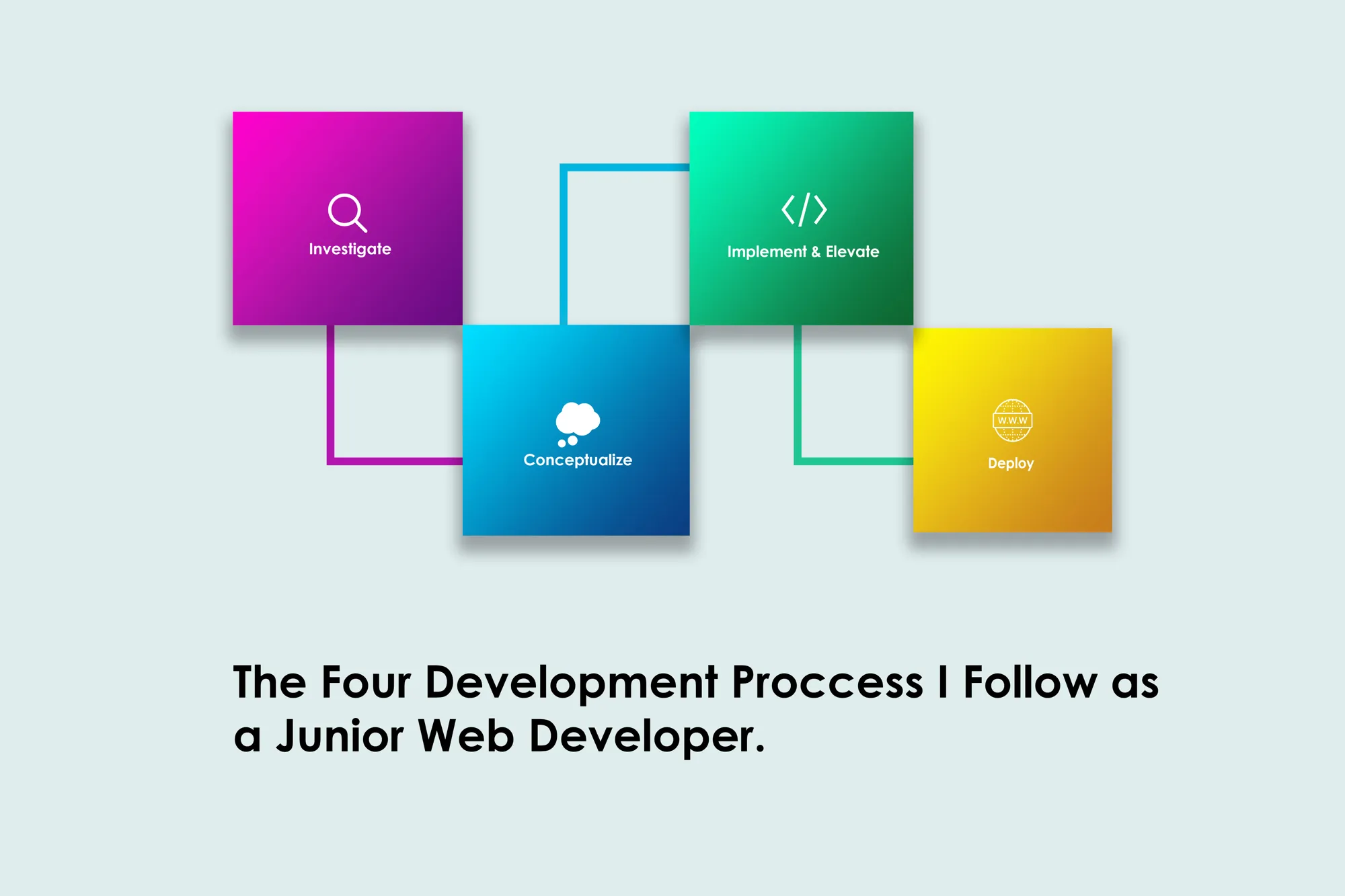
Software and Problem Solving · April 5, 2026 · 2 min read
What Public Speaking Taught Me About Breaking Down Problems
Preparing my first public talk felt overwhelming until I approached it like a software problem. The experience showed me that progress often begins by making a large, uncertain challenge smaller.
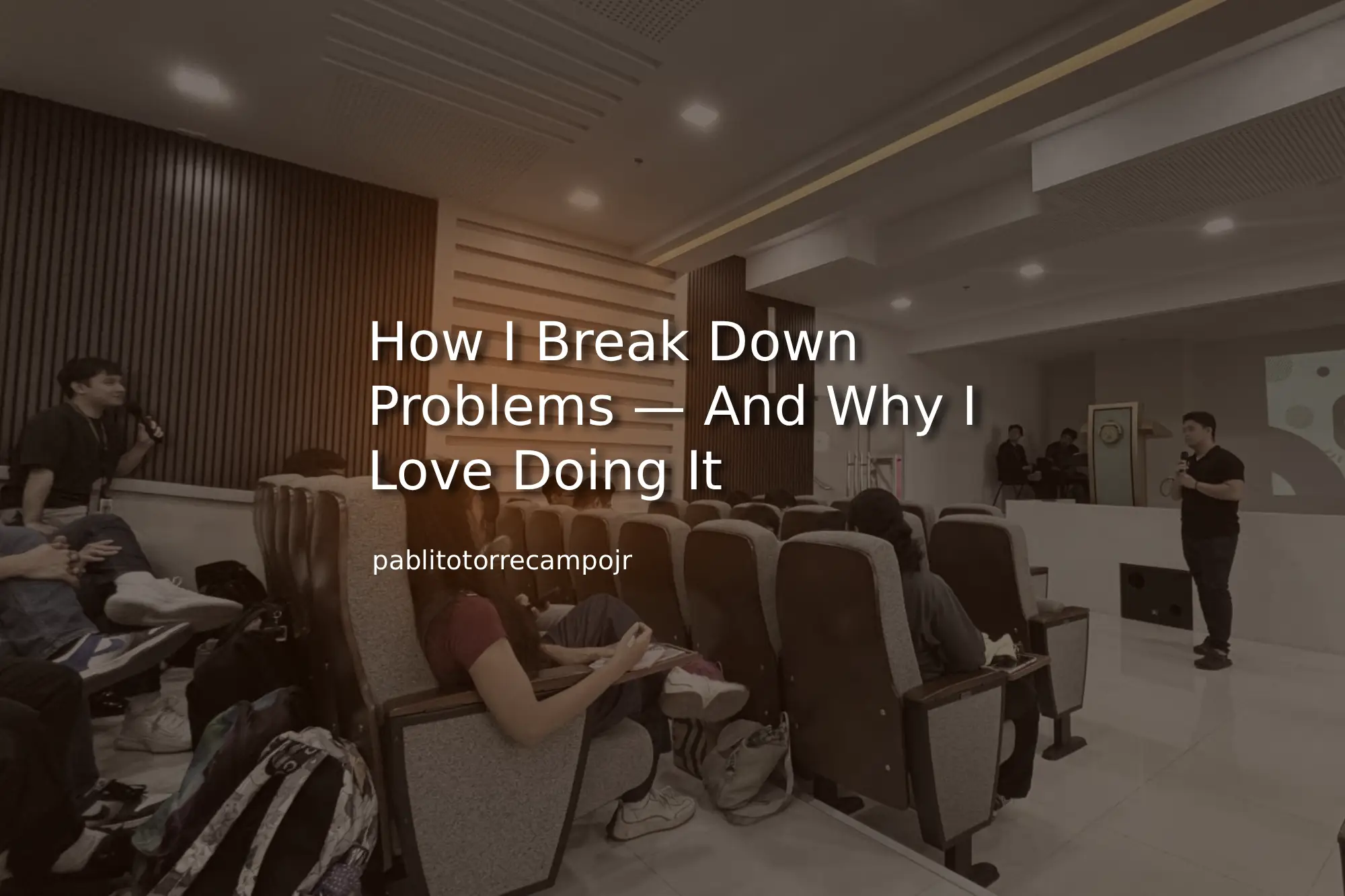
Last February, I stood in front of a room full of students—about to give a talk I wasn’t even sure I was ready for.
I was invited to share my experiences and insights at the University of San Jose-Recoletos. It was exciting, but also unfamiliar. I had never really done public speaking before. The closest experience I had was teaching IT students at Southern Leyte State University earlier in my career.
This time felt different.
I treated it as a personal challenge. Can I actually pull this off? Where do I even begin? What should I tell them?
The topic I was given was broad: “Innovation in today’s business landscape.” At first, it felt overwhelming—but then I approached it the same way I approach problems as a full-stack developer.
Break it down.
In my work, clients often come to me with big, vague problems. It’s my job to identify what really needs solving, break it into smaller parts, and move forward with intention instead of reacting blindly.
So I did the same with this talk.
While preparing, one question kept coming back to me: where does innovation even begin? Does it need to be perfect?
Where Innovation Begins
That question shaped everything.
I shared stories from my own experience—growing up with technology, seeing how things evolved, and realizing that innovation doesn’t start with perfection.
“Innovation starts with a simple question: “What if?””
What if there’s a better way? What if this can be improved? What if we try something new?
As I delivered the talk, something shifted. It stopped feeling like a speech.
It became a conversation.
Students started engaging, asking questions, and sharing their thoughts—especially about pursuing an IT career in a world where AI is rapidly changing the game.
Same Game, New Tools
I told them this: yes, AI is changing how we work. Yes, it can solve problems faster than most developers.
But it’s still the same game—just with new tools.
And those who keep asking “what if” will always have a place in it.
A Personal Win
That experience was a win for me. It may not have been a TED Talk, but it pushed me out of my comfort zone and tested how well I could communicate my ideas to a crowd.
To the students of the University of San Jose-Recoletos. Thank you for the opportunity.
And remember: give it your heart, go beyond plus ultra!
Gallery
Some of the images captured during the event.
What I learned
I learned that problem solving is not limited to software. The same habit of asking questions, identifying the important parts, and moving one step at a time helped me communicate an unfamiliar topic to a room full of students.
How it changed my thinking
I now treat unfamiliar opportunities with more curiosity and less pressure to have every answer immediately. Instead of asking whether I am already ready, I ask what the first understandable piece of the challenge is.