Software and Problem Solving · August 1, 2024 · 1 min read
The Four-Step Process That Keeps My Development Work Focused
A simple sequence—investigate, conceptualize, implement, and deploy—helps me avoid rushing into code and makes my work easier to test, review, and improve.
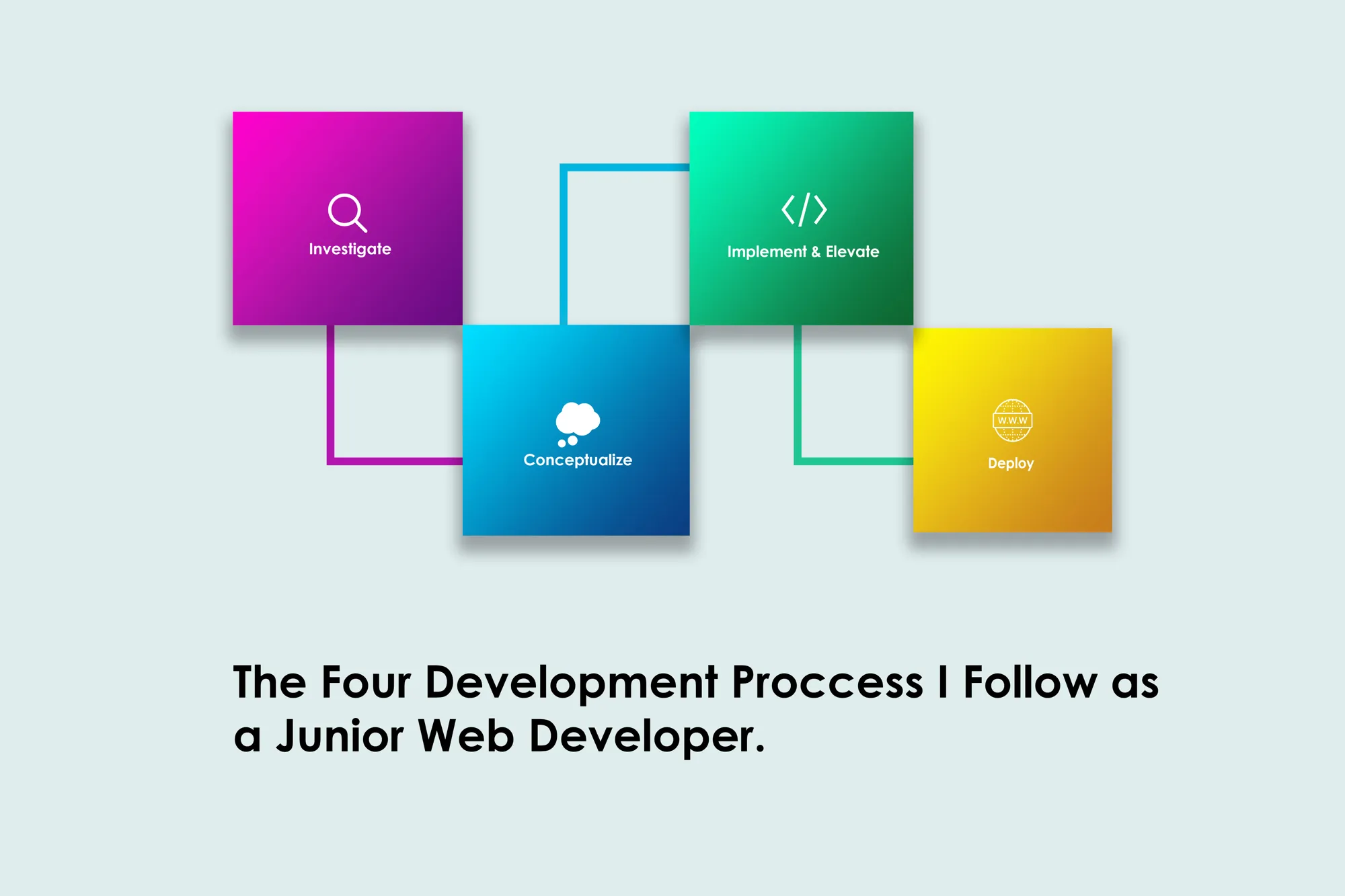
Four Development Processes I Follow as a Junior Developer
Here's the workflow I follow as a junior developer to avoid getting sidetracked.
1. Investigate
Coding is only half of the job; you should know if a course of action is wise or unwise. Create actionable plans based on your investigation.
2. Conceptualize
Once you have a concrete plan, it's important to conceptualize rather than going straight to coding. Pseudo coding or putting those plans into words helps analyze whether my code might block other developers, check if it has been implemented already in other modules, or find existing solutions from other developers. Take notes on factors that could impact your code and remove any possible clutter to make code reviews faster and increase the chances of approval.
3. Implement & Elevate
Once everything is set, you can start coding. Make it a habit to thoroughly test your code, as you'll thank yourself later. Embrace code reviews and accept feedback from senior developers to gauge your progress. Take notes on the feedback and apply or improve on them in the next opportunity.
4. Deploy
After the iterations of testing and code changes based on feedback your code is now ready for deployment.
What I learned
I learned that coding is only one part of delivering a useful change. Investigation prevents unnecessary work, written thinking exposes gaps, testing builds confidence, and review turns one task into a lesson for the next.
How it changed my thinking
I now write down the problem and a proposed direction before implementation, look for existing patterns, and record useful review feedback. This keeps me focused and makes future decisions faster and more deliberate.