Procurement Management Information System (PMIS)
Centralized a six-campus university’s paper-heavy procurement process so departments and procurement staff could follow requests, approvals, records, and inventory from one shared system.
Client and professional work
- Context
- Southern Leyte State University, serving departments across six campuses
- My role
- Assistant programmer who helped translate the six-campus procurement process into requirements, workflows, interfaces, and a shared data structure while supporting a small development team
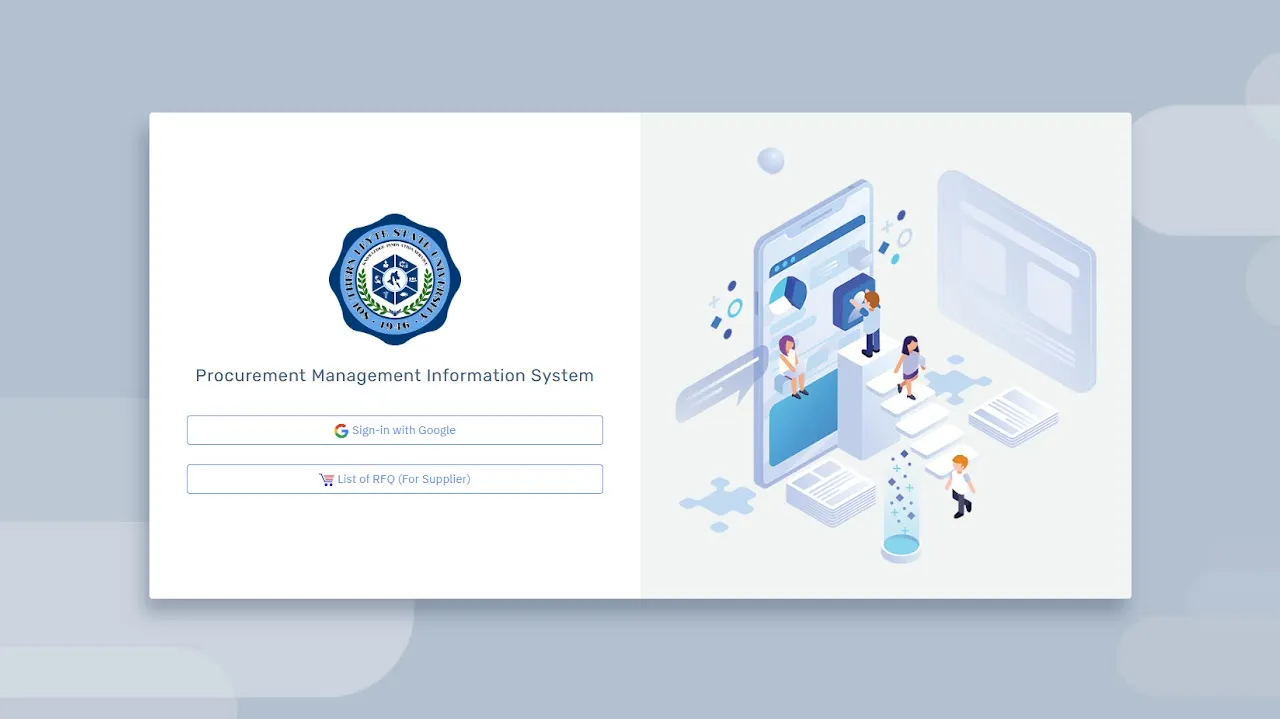
What the application is
Centralized a six-campus university’s paper-heavy procurement process so departments and procurement staff could follow requests, approvals, records, and inventory from one shared system.
Who it was built for
Southern Leyte State University, serving departments across six campuses
My role
Assistant programmer who helped translate the six-campus procurement process into requirements, workflows, interfaces, and a shared data structure while supporting a small development team
The problem
Procurement requests and records are handled manually using paper documents and moved across many offices and campuses, making status, approvals, inventory, and reporting difficult to follow consistently.
What I learned from the existing workflow
- Requesting departments, procurement staff, approvers, and campus offices all participate in the process.
- Information begins in department requests and grows through review, purchasing, receiving, and inventory activities.
- Handoffs between offices and campuses made the current status harder to see and could delay follow-up.
- The system had to reflect institutional policies and produce records that staff could print or export.
The solution
I helped map the university’s real approval path and turn it into a shared digital workflow. Departments and procurement staff could work from the same request record, follow its status across offices, monitor stock, and produce the documents and reports the institution still required.
Key decisions
- Map the real approval path The system follows how university staff actually review procurement instead of imposing a generic workflow.
- Create one source of status Departments and procurement staff can refer to the same record rather than maintaining separate updates.
- Keep printable outputs Digital work still needs to support the institution's required documents and reporting practices.
Result
Replaced fragmented, paper-heavy tracking with one shared system for procurement requests, approvals, records, inventory, and reporting across six campuses. Formal time-saved figures were not collected.
What I learned
This project taught me to treat workflow design as a shared exercise. Listening to the people who own each handoff was as important as building the screens behind it.